Bretagne - Loire Atlantique
"Carrelets "- stille Zeitzeugen einer großen Fischerkultur
Music Recommendation:
Artist: Charles Trenet
Song: La Mer
May all the buddhas smile at us....
"Carrelets"
"BIG FISH - HAPPINESS AT HIGH TIDE"
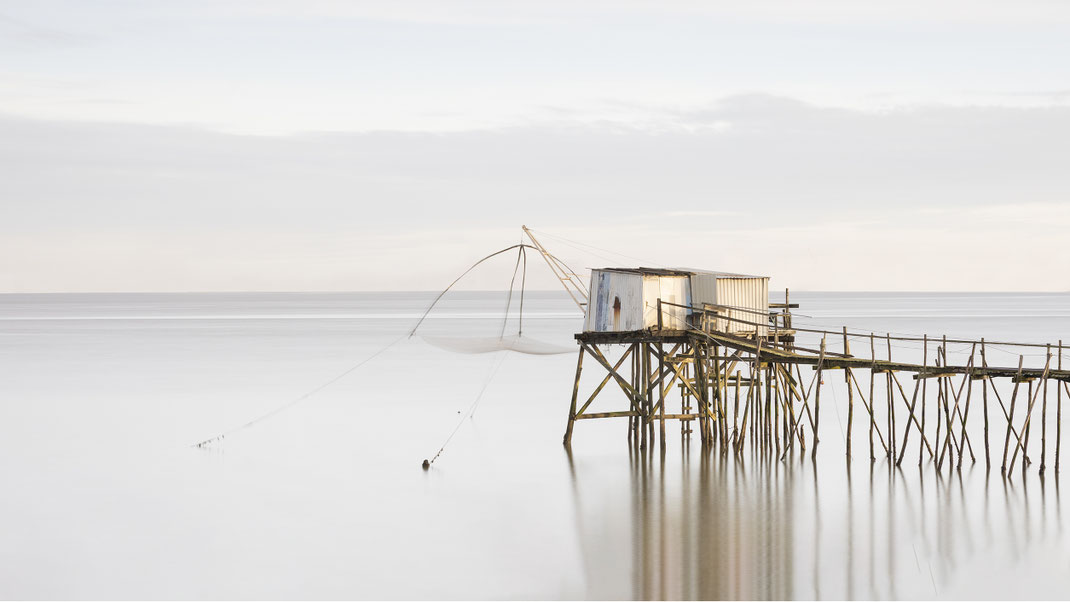
Pêcherie La Ligérienne
Stille Zeitzeugen
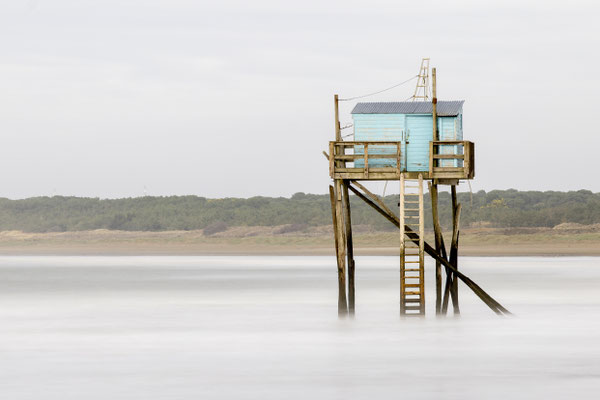
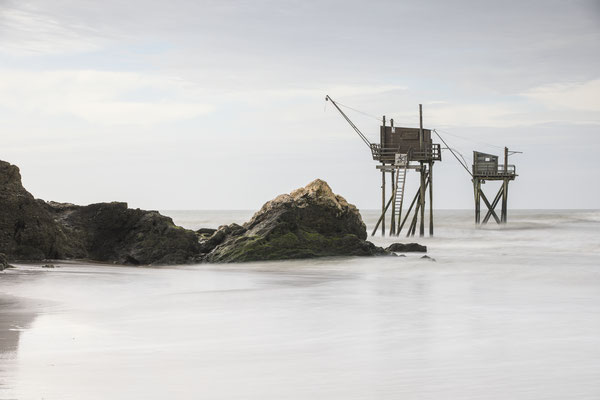
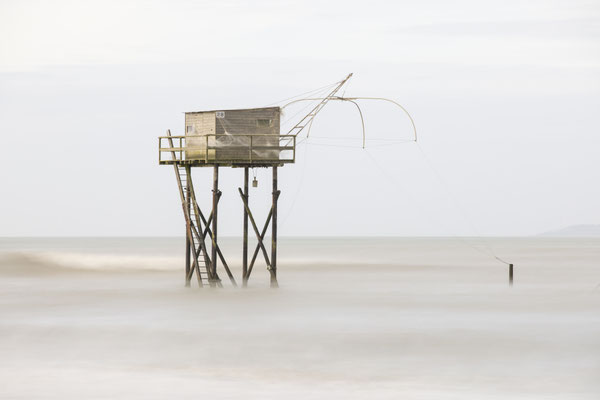
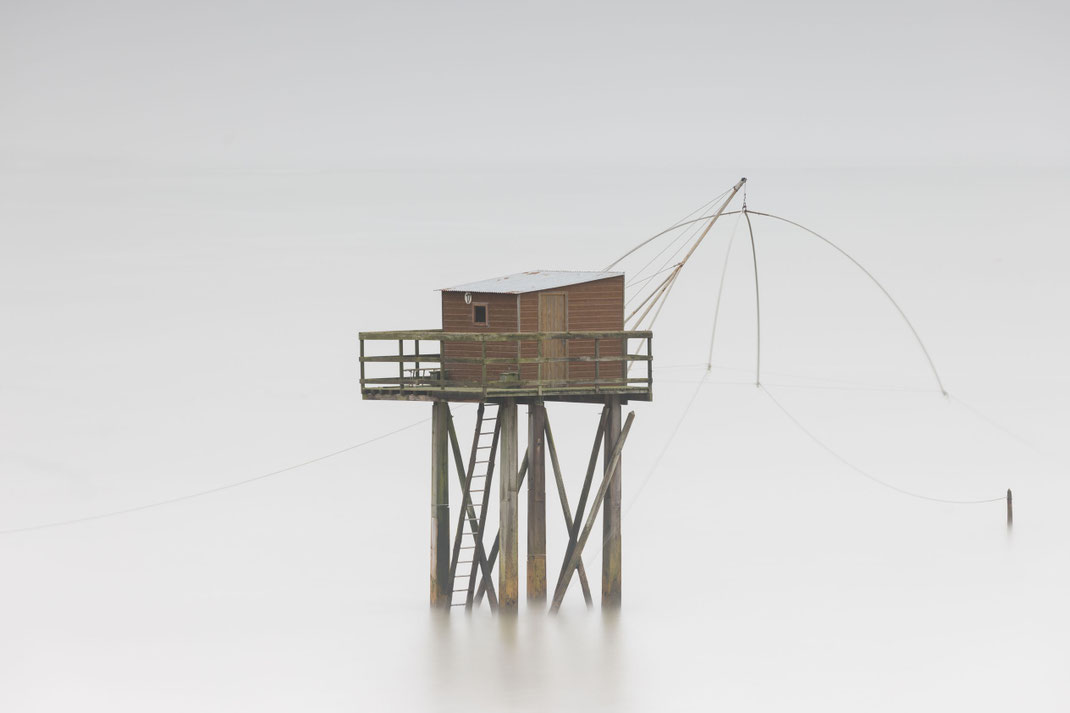
Carrelets – die markanten Fischerhütten auf Stelzen entlang der französischen Atlantikküste – verbinden das Leben der Küstengemeinden mit einer fast poetischen Einfachheit. Sie dienen als Arbeitshütten von Fischern, die dort seit Jahrhunderten dem Angeln und Fischfang nachgehen. Keiner dieser Hütten gleicht der anderen. Es sind faszinierende Objekte um sie fotografisch zu einem Thema zu machen. Oft stehen sie in Reihe und Glied an Uferpromenaden. Folgt man aber den Küstenpfaden außerhalb der Ortschaften stehen sie manchmal an malerischen Buchten oder an Stränden. Echte Schmuckstücke - jedes einzelne von ihnen.
Man kennt derartige Konstruktionen nur aus Italien – in Apulien als trabucchi, in der Emilia Romagna als padelloni oder bilancioni. Auch in Indien wird im Bundesstaat Kerala bei Cochin so gefischt. Dass auch in Frankreich solche cabanes de pêcheurs seit Jahrhunderten zum Einsatz kommen, habe ich erst an Frankreichs Westküste erfahren.
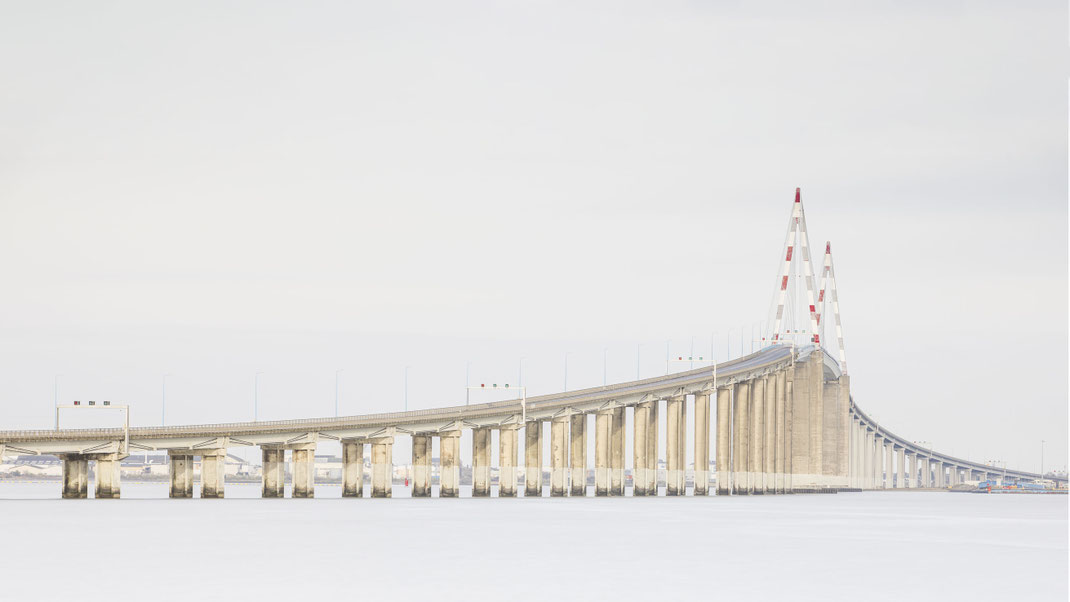
Für das Projekt konnte ich gemeinsam mit meinem Freund Thomas Zilch für ein paar Tage in diese Gegend reisen. Die Bretagne ist ohnehin eine Gegend Frankreichs, die viel für Landschaftsfotografie zu bieten hat. Wir wählten absichtlich die winterlichen Monate, da das Licht entsprechend ist und wir keinem touristischen Trubel begegneten. Wir fanden in Saint-Brévin-les-Pins ein sehr schönes Häuschen, das als Basis unserer täglichen Exkursionen alles bot was wir brauchten. Die Loire ist bei Saint Nazaire imposant und die dort stehende Schrägseilbrücke gehört zu den größten Europas. Sie erhebt sich 61 Meter in die Höhe - wurde 1975 fertiggestellt. Ein beeindruckendes Bauwerk. In fast zierlicher Weise fügen sich die Fischerhütten in das Landschaftsbild. Dabei entstand mein Ziel: die Carrelets nicht nur als Bauwerke, sondern als Symbole einer symbiotischen Beziehung zwischen Mensch, Meer und Zeit zu fotografieren und zu zeigen.
Silent Witnesses
Carrelets – the distinctive fishing huts on stilts along the French Atlantic coast – connect the lives of coastal communities with an almost poetic simplicity. They serve as working huts for fishermen who have practiced angling and fishing there for centuries. No two huts are alike. They are fascinating objects and an inspiring subject for photography. Often they stand in neat rows along seaside promenades. But if you follow the coastal paths outside the villages, you sometimes find them in picturesque bays or on beaches. True gems – every single one of them.
Similar constructions can be found only in Italy – known as trabucchi in Apulia and as padelloni or bilancioni in Emilia-Romagna. In India, too, the same method of fishing is used in the state of Kerala near Cochin. That such cabanes de pêcheurs have been in use in France for centuries was something I discovered only on the country’s western coast.
For this project, I was able to travel to this region with my friend Thomas Zilch for a few days. Brittany is, after all, a part of France that offers much for landscape photography. We deliberately chose the winter months, as the light is special at that time and we could avoid the tourist crowds. We found a lovely little house in Saint-Brévin-les-Pins, which provided everything we needed as a base for our daily excursions. The Loire is quite imposing near Saint-Nazaire, and the cable-stayed bridge there—completed in 1975—rises 61 meters high, one of the largest in Europe. An impressive structure indeed. In a nearly delicate way, the fishing huts blend into the landscape. That was where my artistic aim emerged: to photograph the carrelets not merely as architectural structures but as symbols of the symbiotic relationship between humanity, the sea, and time.
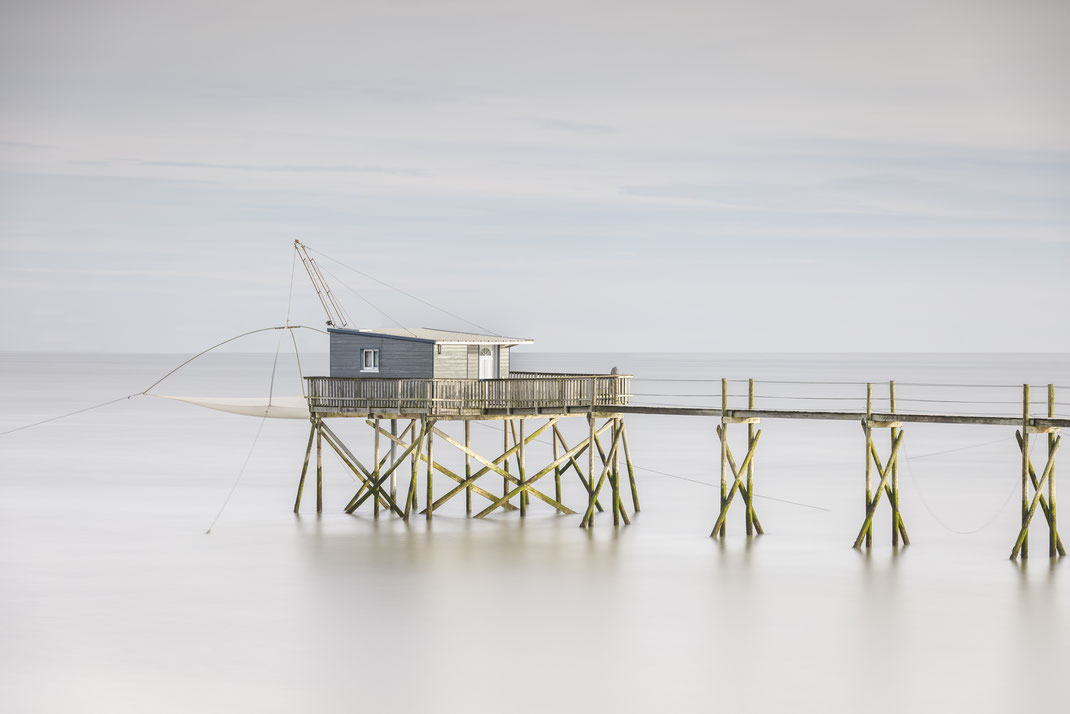
Daten zusammentragen: Sonnenstand, Ebbe und Flut
Licht und Wasser bestimmen die Charakteristik eines jeden Carrelet-Fotos. Ich nutze verschiedene Tools , um den Sonnenstand, die Goldene und Blaue Stunde sowie Gezeitenzeiten zu erkennen.
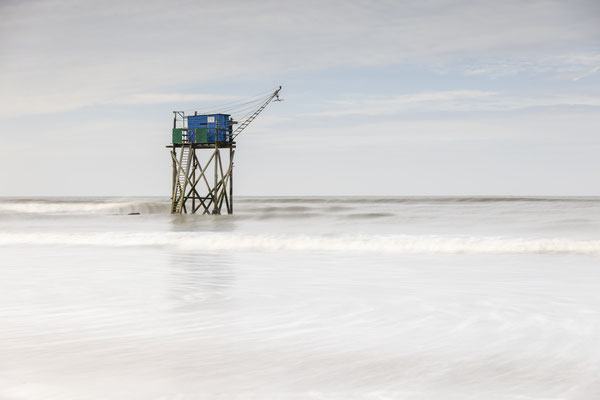
Das Timing ist entscheidend: Bei Ebbe ragen die Stelzen wie Gerippe aus dem Sand, bei Flut trotzen sie den mitunter mächtig, anrollenden Wellen.
Gathering sun position, ebb and flow
Light and water define the character of every carrelet photograph. I use various tools to determine the sun’s position, the golden and blue hours, as well as the tides.
Timing is crucial: at low tide, the stilts rise from the sand like skeletons; at high tide, they stand firm against the sometimes powerful, rolling waves.
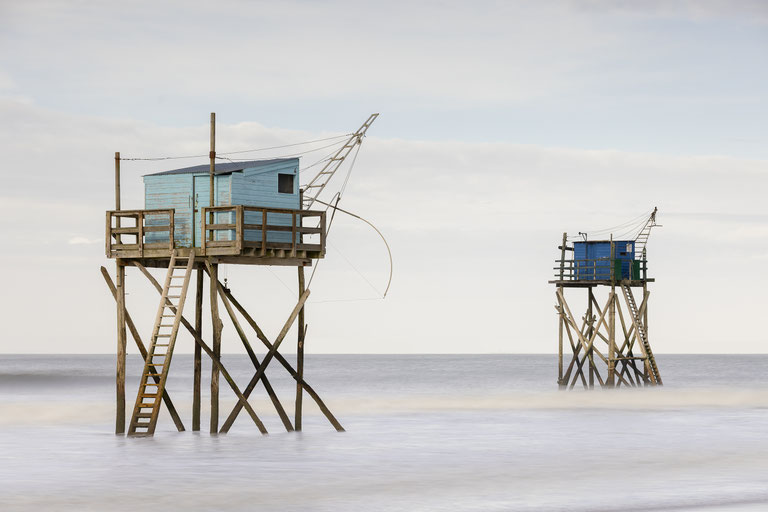
Eine KMZ-Datei erstellen
Um die Standorte systematisch zu dokumentieren, erstellte ich eine KMZ-Datei (Google Earth). Sie enthält GPS-Koordinaten, Beschreibungen, Fotos und Notizen zu jedem Carrelet, das ich besuchte.
Ein solches geografisches Archiv erlaubt nicht nur eine geordnete Standortplanung, sondern auch die spätere Rekonstruktion fotografischer Routen. Die Einbindung von Höhenprofilen und Küstenlinien hilft, Gezeiten und Zugänglichkeiten besser einzuschätzen – essenziell für das Fotografieren an der Küste.
Creating a KMZ File
To document the locations systematically, I created a KMZ file (Google Earth). It contains GPS coordinates, descriptions, photos, and notes for each carrelet I visited.
Such a geographic archive not only enables organized site planning, but also allows for the later reconstruction of photographic routes. Incorporating elevation profiles and coastlines helps to better assess tides and accessibility—essential for coastal photography.
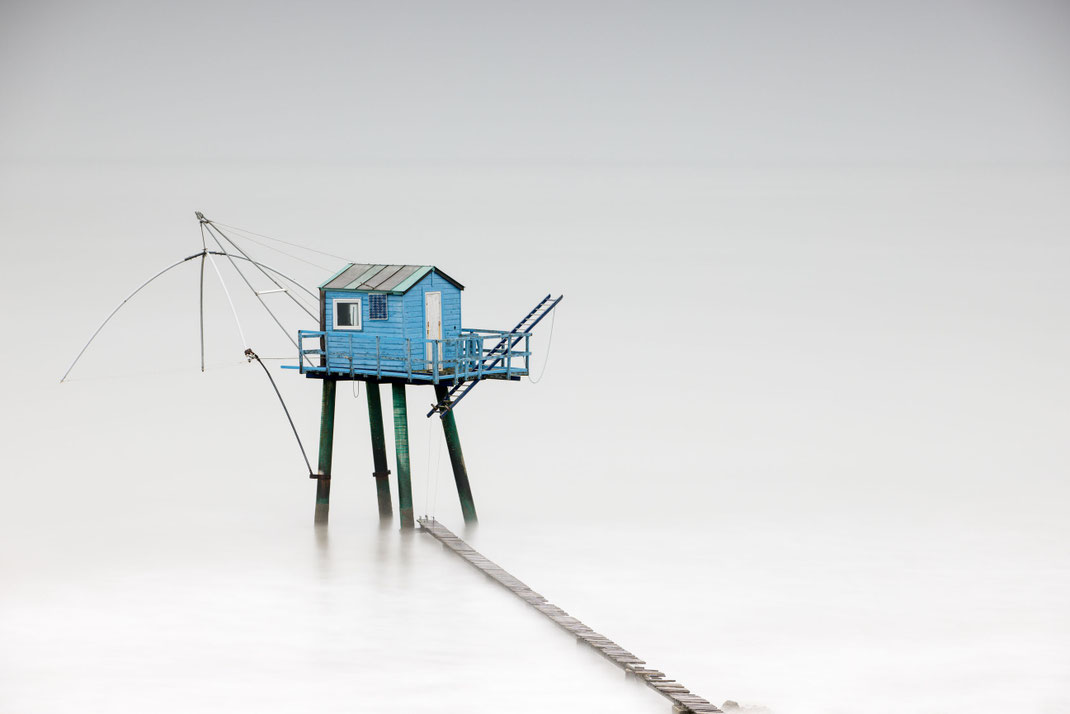
Fotografische Methode der Langzeitbelichtung
Die Langzeitbelichtung ist meine bevorzugte Technik, um die Ruhe und Zeitlosigkeit der Szene einzufangen. Durch die Dynamik des Meeres und der langen Belichtungszeiten erhalten die Carrelets eine fast schwebende Wirkung. Diese Komponenten mache ich mir zunutze, um die Stille und Bewegung gleichzeitig darzustellen.
Mit diversen neutralgrauen Filtern (ND) verlängere ich die Belichtungszeit von bis 30 Sekunden oder sogar auf bis zu mehreren Minuten. Dadurch wird die Wasseroberfläche zu einer glatten Fläche, der Himmel zu weichen Bewegungen – die Carrelets bleiben dagegen scharf und statisch.
Diese Kombination aus Bewegung und Stillstand, aus Chaos und Ordnung, verleiht den Bildern eine meditative Dimension.
Photographic Method of Long Exposure
Long exposure is my preferred technique to capture the serenity and timelessness of a scene. Through the dynamics of the sea and the extended exposure times, the carrelets take on an almost floating appearance. I use these elements to depict stillness and motion simultaneously.
With various neutral density (ND) filters, I extend the exposure time to 30 seconds or even several minutes. This transforms the water’s surface into a smooth plane and the sky into soft, flowing movements—while the carrelets remain sharp and static.
This interplay of motion and stillness, of chaos and order, lends the images a meditative quality.

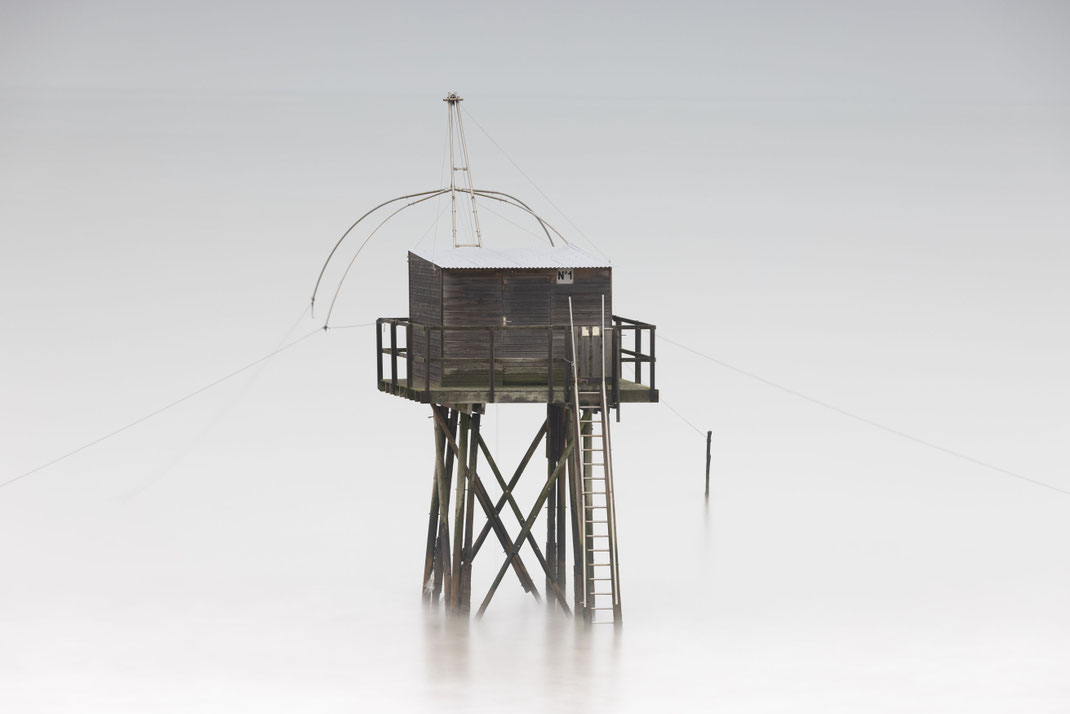
Minimalisierung skulptureller Objekte
Beim Komponieren der Bilder versuche ich, jedes Carrelet als skulpturales Element wahrzunehmen. Ich reduziere die Komposition auf Linien, Geometrien und negative Flächen. Weniger ist hier mehr: das Meer, der Himmel, das Bauwerk.
Die Klarheit entsteht durch bewussten Verzicht – kein überladenes Motiv, keine dramatische Nachbearbeitung, sondern die ehrliche Präsentation dieser stillen Konstruktionen in Raum und Zeit.
Minimization of sculptural objects
When composing the images, I try to perceive each carrelet as a sculptural element. I reduce the composition to lines, geometries, and negative space. Less is more here: the sea, the sky, the structure.
Clarity arises through deliberate restraint – no overloaded subject, no dramatic post-processing, but rather an honest presentation of these silent constructions in space and time.
Zeitlose Landschaftsfotografie
Am Ende steht das Streben nach Zeitlosigkeit. Die Carrelets sind für mich nicht nur Objekte, sondern Schnittstellen zwischen Kultur und Natur, Vergangenheit und Gegenwart. Durch Reduktion, Langzeitbelichtung und präzises Timing verwandle ich sie in Sinnbilder für Beständigkeit.
Jedes Bild trägt die Spur der Geschichte, des Lichts und der Gezeiten – ein Gleichgewicht, das weder Ort noch Zeit festlegen, sondern nur fühlen lässt.
Timeless Landscape Photography
In the end, it all comes down to the pursuit of timelessness. For me, the carrelets are not merely objects but intersections between culture and nature, between past and present. Through reduction, long exposure, and precise timing, I transform them into symbols of permanence.
Each image carries the trace of history, of light, and of the tides – a balance that defines neither place nor time, but can only be felt.

le pont de Saint-Nazaire